AI Engineer vs ML Engineer vs Data Scientist: What Each Hands Over
Three job titles, the same tools in every ad. Ask what each one hands over at the end: an answer, a model trained on your own data, or a product built on a ready-made model.
What you'll learn
- Tell an AI engineer, an ML engineer and a data scientist apart with one question: what does the work hand over at the end?
- Follow each job through a real example, from the data it starts with to the thing it delivers.
- Spot which job a task needs, and when a task needs no AI product at all.
- Read a job ad past its title, and see where the three jobs overlap in real teams.
What to know first: the lesson What Is an AI Engineer?, which showed that an AI engineer turns a ready-made model into something that works for real people. Here a model means a program that has learned patterns from examples, and training means the learning. No maths is needed.
The problem: three titles, the same tools
You open a jobs app, and three job titles look almost the same: AI engineer, ML engineer, data scientist. Every ad asks for Python, data and models. So which job is which, and which one do you want?
Let's make it concrete. Aryan's family runs a small grocery shop at the front of their house. Every bill goes into a sales book, and customers also order by phone. Aryan wants help with three jobs:
- Did the festival offer bring in more customers?
- How much milk should the shop order each night, so it doesn't run out or go sour?
- Answer customer chats, like "is flour in stock?"
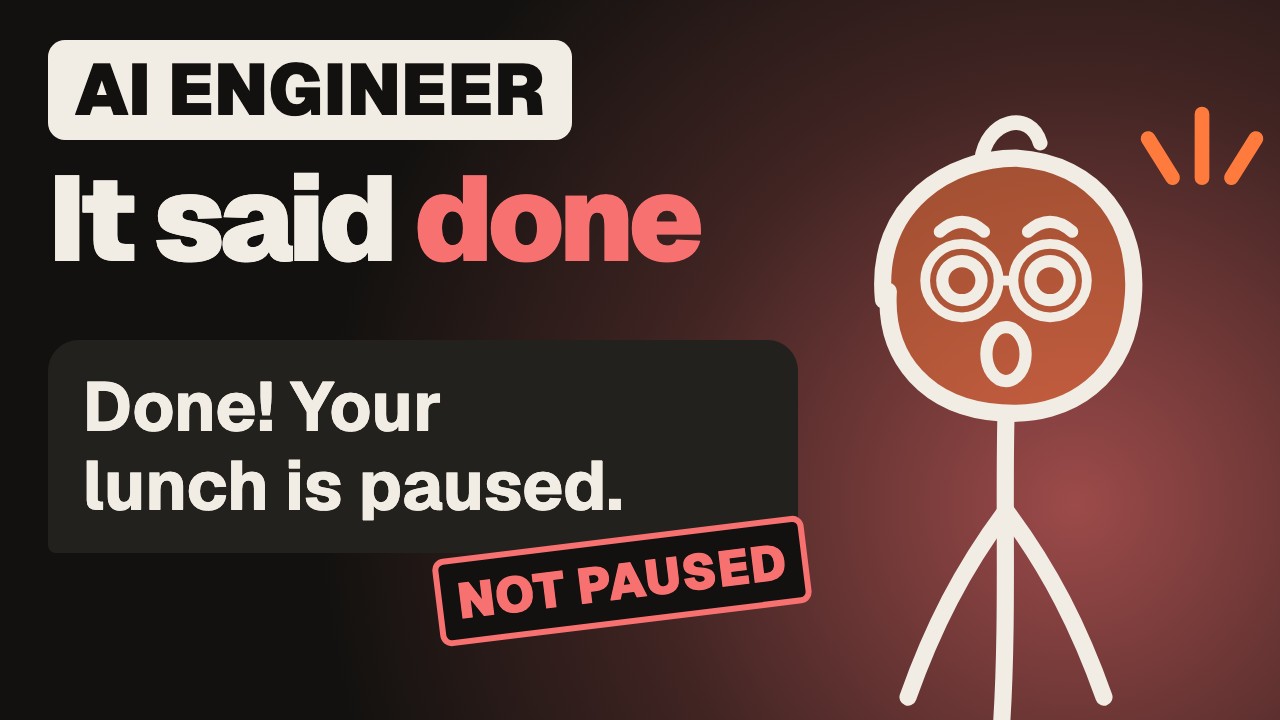
Their friend Kelvin has a plan: they all use Python and data, so hire one AI person and use a chatbot. Aryan tries it on the milk first. They ask a ready-made chatbot how much milk to order for Sunday. It says about 40 litres should be plenty. Aryan orders 40. On Sunday the shop sells 70, and the milk runs out by nine in the morning. The breakfast crowd gets no milky tea.
| Day | Milk sold (litres) |
|---|---|
| Monday | 40 |
| Wednesday | 41 |
| Friday | 45 |
| Sunday | 70 |
| Chatbot's guess for Sunday | 40 |
Monday
- Milk sold (litres)
- 40
Wednesday
- Milk sold (litres)
- 41
Friday
- Milk sold (litres)
- 45
Sunday
- Milk sold (litres)
- 70
Chatbot's guess for Sunday
- Milk sold (litres)
- 40
The chatbot never saw this sales book, so it guessed an ordinary day. Nothing was wrong with the chatbot; it was the wrong kind of help for this job. Kelvin's mistake is the one the jobs app invites: sorting the three jobs by their tools. The tools are the same. What each job hands over is not.
The big picture: one shop, three kinds of work
Here is the whole idea in one picture. Two of the jobs start from the shop's own data. One starts from a model someone else already trained. Each ends with a different kind of thing.
- Sales book (the shop's own data) to Data scientist (analysis)
- Sales book (the shop's own data) to ML engineer (training and running)
- Sales book (the shop's own data) to AI engineer (building on a model)
- Ready-made model (trained by a vendor) to AI engineer (building on a model)
- Data scientist (analysis) to Weekends only (an answer)
- ML engineer (training and running) to Milk model (a model, runs nightly)
- AI engineer (building on a model) to Shop chat (a product)
A picture you already know helps. Think of a sandwich café. One person studies the bills and tells you which sandwiches sell. One bakes the bread from scratch. One buys good bread and makes the sandwiches customers order. The bill-reader is the data scientist, the baker is the ML engineer, and the sandwich-maker is the AI engineer.
The data scientist: hands over an answer
A data scientist turns a question about the business into an answer backed by data. Think of a doctor reading test results: the work is not done until there is a diagnosis someone can act on. The US Bureau of Labor Statistics describes the job as using analytical tools and techniques to pull meaningful insights out of data.
- Sharpen the question. "Did the offer work?" becomes "Did more customers come in per day during the offer than before it?"
- Collect and clean the data. Two years of bills from the sales book, with typos and missing days fixed.
- Analyse. Compare before and during, and check the difference isn't luck: a busy week can happen by chance. Checking that is what statistics is for, the maths of telling a real pattern from noise.
- Hand over the answer. One clear chart and a sentence the owner can act on.
| Step | Working | Result |
|---|---|---|
| Weekdays before the offer | Average customers per day | 120 |
| Weekdays during the offer | Average customers per day | 122 |
| Weekday change | 122 − 120 = 2, out of 120 | about 2% more |
| Weekends before the offer | Average customers per day | 150 |
| Weekends during the offer | Average customers per day | 195 |
| Weekend change | 195 − 150 = 45, out of 150 | 30% more |
Weekdays before the offer
- Working
- Average customers per day
- Result
- 120
Weekdays during the offer
- Working
- Average customers per day
- Result
- 122
Weekday change
- Working
- 122 − 120 = 2, out of 120
- Result
- about 2% more
Weekends before the offer
- Working
- Average customers per day
- Result
- 150
Weekends during the offer
- Working
- Average customers per day
- Result
- 195
Weekend change
- Working
- 195 − 150 = 45, out of 150
- Result
- 30% more
Notice what came out: not software, not a model that runs every night, but a decision. Next festival, Aryan runs the offer at weekends only and saves the weekday discount. A stronger version of this check is an A/B test: give the offer to some customers and not to others at the same time, so the weather or the festival itself can't explain the difference.
The ML engineer: hands over a model trained on your data
ML stands for machine learning: a program that learns patterns from examples, like past sales, instead of following rules someone wrote by hand. The next lesson, AI, ML, Deep Learning and LLMs, covers it properly. An ML engineer builds those learning programs on a company's own data and keeps them running inside a product. In the café picture, they bake the bread from your own flour.
Who should own the milk order? Most people guess the AI engineer, because AI sounds like the answer to everything. But no ready-made chatbot has seen this shop's Sundays. The milk job needs a model that learns from Aryan's own sales book, and keeps learning as the shop changes.
- Gather the training data. Past daily milk sales, tidy and in one place. This is often most of the work.
- Train. Feed the examples to a learning program, which finds the pattern: Sundays sell far more than weekdays.
- Test on days it never saw. Hold back the latest week and check the model's guesses against what really sold.
- Deploy. Put the model into the shop's ordering, so every night it suggests tomorrow's milk order. *Deploy* means putting it where real work uses it.
- Monitor and retrain. Watch its mistakes. If a new apartment block opens and Sundays jump to 90 litres, the old pattern is out of date, so the model is retrained on newer sales.
| Day | Same day, last 4 weeks | Learned forecast | Sold next week |
|---|---|---|---|
| Monday | 38, 42, 40, 40 | 40 | 41 |
| Wednesday | 40, 43, 40, 41 | 41 | 42 |
| Friday | 44, 46, 45, 45 | 45 | 44 |
| Sunday | 66, 72, 68, 70 | 69 | 71 |
| Chatbot's one guess | never saw the book | 40 | 71 |
Monday
- Same day, last 4 weeks
- 38, 42, 40, 40
- Learned forecast
- 40
- Sold next week
- 41
Wednesday
- Same day, last 4 weeks
- 40, 43, 40, 41
- Learned forecast
- 41
- Sold next week
- 42
Friday
- Same day, last 4 weeks
- 44, 46, 45, 45
- Learned forecast
- 45
- Sold next week
- 44
Sunday
- Same day, last 4 weeks
- 66, 72, 68, 70
- Learned forecast
- 69
- Sold next week
- 71
Chatbot's one guess
- Same day, last 4 weeks
- never saw the book
- Learned forecast
- 40
- Sold next week
- 71
The averaging rule in the table is tiny, but it shows the shape of the job: learn from your own past, check on days the model hasn't seen, then run it every night. Google's guide to running models in production (they call it MLOps, the habits that keep models trained, tested and deployed automatically) is mostly about steps 4 and 5, not step 2. A well-known Google paper, *Hidden Technical Debt in Machine Learning Systems*, makes the same point: in real systems the learning code is a small part, and the data handling, serving and monitoring around it are most of it.
The AI engineer: hands over a product built on a ready-made model
An AI engineer starts from a model someone else already trained, usually a large language model (an LLM, the kind of model behind chatbots, taught in What Is an LLM?) from a vendor, and builds the product people use around it. In the café, they buy good bread and make the sandwiches. Chip Huyen's book *AI Engineering* draws the same line: the work is less about building models and more about adapting and evaluating models that already exist.
- Pick a model and call it. The shop's code sends the customer's message to the model and gets a reply back. That message-and-reply is an API call, a request from one program to another over the internet; the lesson Your First LLM API Call shows one.
- Connect it to the shop's facts. The model doesn't know today's stock, so the AI engineer lets it look things up. Letting a model ask your code to run a lookup is tool calling (lesson Agent Tool Calling); handing it the right pages of your own documents before it answers is RAG (lesson What Is RAG?).
- Set the rules. Instructions for tone and limits: never promise delivery outside the delivery area, never guess a price.
- Test it. Run a list of real customer questions and check every answer. A repeatable test like this is an eval (lesson LLM Evals).
| Customer asks | What the AI engineer added | Answer |
|---|---|---|
| Is flour in stock? | Looks up the stock list | Yes, 12 bags left |
| Can you deliver to Block C? | Checks the delivery area list | Yes, before 7 pm |
| How much milk for Sunday? | Not this product's job | Asks the milk model's number |
Is flour in stock?
- What the AI engineer added
- Looks up the stock list
- Answer
- Yes, 12 bags left
Can you deliver to Block C?
- What the AI engineer added
- Checks the delivery area list
- Answer
- Yes, before 7 pm
How much milk for Sunday?
- What the AI engineer added
- Not this product's job
- Answer
- Asks the milk model's number
The last row matters. The shop chat doesn't guess the milk. If it ever needs that number, it asks the ML engineer's milk model. The three jobs fit together: the data scientist finds which questions are worth answering, the ML engineer builds models on the shop's own data, and the AI engineer builds the product that people talk to.
The three jobs side by side
| Question | Data scientist | ML engineer | AI engineer |
|---|---|---|---|
| Starts from | A business question | Your own data | A ready-made model |
| Main work | Analysis, experiments | Training, deploying, monitoring | Building, connecting, testing |
| Hands over | An answer | A model trained on your data | A product built on a ready model |
| Success looks like | A better decision | Accurate guesses, every night | Users get right answers |
| Shop example | Offer worked at weekends | Nightly milk order | Shop chat |
Starts from
- Data scientist
- A business question
- ML engineer
- Your own data
- AI engineer
- A ready-made model
Main work
- Data scientist
- Analysis, experiments
- ML engineer
- Training, deploying, monitoring
- AI engineer
- Building, connecting, testing
Hands over
- Data scientist
- An answer
- ML engineer
- A model trained on your data
- AI engineer
- A product built on a ready model
Success looks like
- Data scientist
- A better decision
- ML engineer
- Accurate guesses, every night
- AI engineer
- Users get right answers
Shop example
- Data scientist
- Offer worked at weekends
- ML engineer
- Nightly milk order
- AI engineer
- Shop chat
All three write Python, all three work with data, and all three talk about models. That is why the jobs app looks confusing. The one question that separates them is the row in the middle: what does the work hand over at the end?
A code sketch: learning from your own sales
This sketch shows the heart of the milk job: a forecast learned from the shop's own past, tested on a week it never saw, next to one fixed guess for every day.
# Milk sold (litres) at Aryan's shop, four past weeks
past = {
    "Mon": [38, 42, 40, 40],
    "Wed": [40, 43, 40, 41],
    "Fri": [44, 46, 45, 45],
    "Sun": [66, 72, 68, 70],
}
next_week = {"Mon": 41, "Wed": 42, "Fri": 44, "Sun": 71}  # never seen


def forecast(day):
    """Learn from the shop's own past: average the same weekday."""
    return sum(past[day]) / len(past[day])


one_guess = 40  # one number for every day, like the chatbot's

for day, sold in next_week.items():
    learned = forecast(day)
    print(f"{day}: learned {learned:.0f}, one guess {one_guess}, sold {sold}")
pastis the training data, the examples a model learns from: four weeks of the shop's own sales for each weekday. The last number in each list is the week of the story.next_weekis held back. The forecast never sees it while learning, so it is a fair test.forecastis the whole "model": the average of the same weekday. It learned that Sundays are busy only because the data said so.one_guessstands in for the chatbot, which had no sales book and said 40 for every day.- The loop compares both against what really sold. On Sunday the learned forecast is 2 litres off; the fixed guess is 31 litres off.
An ML engineer's real version swaps the average for a proper learning method and adds festivals, weather and prices. The shape stays: own data in, test on unseen days, run it every night.
Common misconceptions
- "AI engineer is only a new name for ML engineer." Not quite. ML engineers make models from data; AI engineers start from a ready-made model and build what people use. The name became common around 2023, when strong ready-made models made that second job big enough to stand on its own.
- "Same tools means same job." Python, data and models appear in all three ads. The difference is the output: an answer, a trained model, or a product.
- "An AI engineer can replace the other two." A ready-made chatbot never saw your sales book. Forecasting your own numbers still needs a model trained on your own data, and deciding whether an offer worked still needs careful analysis.
- "Data scientists only make charts." Many build and test models too, often the first version that an ML engineer later makes reliable. Their work is judged by the decision it supports.
- "Every problem needs an AI product." If you need one answer once, like whether the offer worked, a chat app is wasted money. A data scientist and a spreadsheet will do.
In real work
Titles blur at work. A small startup may have one person doing all three; a large company may split each job further, with data engineers who only build the pipelines that move data around. When you read an ad, skip the title and look at what the role must deliver.
| The ad says | What it hands over | Which job it really is |
|---|---|---|
| Run experiments, report to product leads | Answers and decisions | Data scientist |
| Train, deploy and monitor models on our data | Models in production | ML engineer |
| Build features with LLM APIs, RAG and evals | Products on ready models | AI engineer |
| Fine-tune open models and serve them on GPUs | Adapted models | Overlap of ML and AI engineer |
Run experiments, report to product leads
- What it hands over
- Answers and decisions
- Which job it really is
- Data scientist
Train, deploy and monitor models on our data
- What it hands over
- Models in production
- Which job it really is
- ML engineer
Build features with LLM APIs, RAG and evals
- What it hands over
- Products on ready models
- Which job it really is
- AI engineer
Fine-tune open models and serve them on GPUs
- What it hands over
- Adapted models
- Which job it really is
- Overlap of ML and AI engineer
The costs differ too. A data scientist's work costs mostly time. An ML engineer's costs include training and running models on your own servers or GPUs, plus the never-ending work of keeping data fresh. An AI engineer pays a vendor per token (a small piece of text, roughly part of a word, covered in its own lesson) for each call to a ready-made model, so a chat that grows popular grows its bill with it; much of the job is keeping answers right while keeping that bill sensible.
This roadmap trains you for the third job. People do move between the three: data scientists who learn to ship products, ML engineers who move to building on ready-made models, and AI engineers who later learn to train their own when a ready-made model isn't enough.
Recap
- Three titles share the same tools, so tools can't tell them apart.
- A data scientist turns a business question into an answer backed by data: the offer worked, but only at weekends.
- An ML engineer trains a model on your own data, tests it on unseen days, deploys it and retrains it: the nightly milk order.
- An AI engineer builds a product on a ready-made model, connected to your facts and tested: the shop chat.
- Some problems need no AI product at all.
Next lesson: AI, machine learning, deep learning (machine learning with many-layered learning programs) and LLMs sound like one thing. They aren't: they fit inside one another, like boxes in boxes.
Practice
- Why did the chatbot say 40 litres for Sunday, and which job should own the milk order?
- The shop chat is asked how much milk to order. What should it do, and why?
- Challenge: a cinema wants to (a) know if Tuesday discounts fill seats, (b) predict popcorn needed per show, and (c) answer "what's on tonight?" in a chat. Name the job for each, and what each hands over.
True or false? Check yourself:
- "Data scientists, ML engineers and AI engineers use different programming languages." False: all three commonly use Python. The output differs, not the tools.
- "An AI engineer usually starts from a model someone else trained." True: that is the defining starting point.
- "A model trained once on last year's sales stays right forever." False: when the shop changes, the model is retrained. Keeping it right is part of the ML engineer's job.
Summary
Key takeaways
- Ask what they hand over: an answer, a model trained on your data, or a product built on a ready-made one.
- All three jobs use Python and data, so the tools can't tell them apart.
- A data scientist answers a business question; the work ends in a decision.
- An ML engineer trains, deploys and retrains models on a company's own data.
- An AI engineer builds products on ready-made models; that's the job this roadmap trains for.
- Some problems need no AI product at all: one clear answer is enough.
Interview corner
How is an AI engineer different from an ML engineer and a data scientist?
By what each hands over. A data scientist turns a business question into an answer backed by data. An ML engineer trains models on the company's own data and keeps them running and retrained in production. An AI engineer starts from a ready-made model, usually an LLM, and builds a product around it: connecting it to the company's data, setting rules and running evals. The tools overlap, and in small teams one person may do two of these, but the starting point and the output differ.
Practice
Check your understanding
0 of 5 answered
Finished this lesson?
Mark it done to track your progress. Saved in this browser only.
FAQ
Frequently asked questions
Is an AI engineer the same as an ML engineer?
No. An ML engineer trains models on a company's own data and keeps them running. An AI engineer starts from a ready-made model and builds the product people use. The two overlap, for example when a team adapts an open model.
Which is better for a beginner: data scientist, ML engineer or AI engineer?
It depends on what you enjoy delivering. If you like answering questions with data, data science. If you like building and running models, ML engineering. If you like building products on top of ready-made models, AI engineering, the path this roadmap follows. It needs the least maths to start.
Do AI engineers need to know machine learning?
Enough to understand what a model is, how it was trained and why it fails. They rarely train models from scratch; most of the work is connecting, testing and improving products built on models others trained.
What does a data scientist actually hand over?
An answer a person can act on: a chart, a report or an experiment's result, such as whether an offer brought in more customers. Many also build first versions of models.
Sources
Where the facts come from
- Data Scientists: Occupational Outlook Handbook (US Bureau of Labor Statistics)
- MLOps: Continuous delivery and automation pipelines in machine learning (Google Cloud)
- Hidden Technical Debt in Machine Learning Systems (Sculley et al., NeurIPS 2015)
- AI Engineering: Building Applications with Foundation Models (Chip Huyen, O'Reilly)
- The Rise of the AI Engineer (swyx, Latent Space, 2023)